


AJDRAJNR - American Journal of Neuroradiology

This Article
Right arrow Abstract Freely available
Right arrow Full Text
Right arrow Full Text (PDF)
Right arrow Alert me when this article is cited
Right arrow Alert me if a correction is posted
Right arrow Citation Map
Services
Right arrow Similar articles in this journal
Right arrow Similar articles in PubMed
Right arrow Alert me to new issues of the journal
Right arrow Download to citation manager
Right arrow reprints & permissions
Citing Articles
Right arrow Citing Articles via HighWire
Right arrow Citing Articles via CrossRef
Right arrow Citing Articles via Google Scholar
Google Scholar
Right arrow Articles by Rossi, A.
Right arrow Articles by Tortori-Donati, P.
Right arrow Search for Related Content
PubMed
Right arrow PubMed Citation
Right arrow Articles by Rossi, A.
Right arrow Articles by Tortori-Donati, P.

MR Imaging of Brain-Stem Hypoplasia in Horizontal Gaze Palsy with Progressive Scoliosis

Andrea Rossia, Martin Catalac, Roberta Biancheria, Raffaella Di Comiteb and Paolo Tortori-Donatia

a Department of Pediatric Neuroradiology, G. Gaslini Children’s Research Hospital, Genoa, Italy
b Division of Infantile Neuropsychiatry, G. Gaslini Children’s Research Hospital, Genoa, Italy
c Laboratory of Histology, Embryology, and Cytogenetics, Faculty of Medicine Pitiè-Salpêtriere, Paris, France


View larger version (65K):

[in a new window]
 
FIG 1. MR images obtained in a 13-year-old girl with early-onset thoracolumbar scoliosis.

A, Sagittal T1-weighted image (500/12 [TR/TE]) of the brain shows depression of the floor of the fourth ventricle (arrowhead). The pons and medulla oblongata have a reduced volume.

B, Axial T2-weighted image (4500/120) at the level of the medulla oblongata shows rectangular configuration of the medulla. The floor of the fourth ventricle is tent shaped (arrows), with missing prominence of the cuneate and gracile nuclei. The inferior olivary nuclei (IO) are prominent with respect to the pyramids (P).

C, Axial T2-weighted image (4500/120) at the level of the pons shows absence of the facial colliculi, with tent-shaped configuration of the floor of the fourth ventricle (arrows). A deep midsagittal cleft extends ventrally from the fourth ventricular floor, producing the split pons sign (arrowhead).


View larger version (99K):

[in a new window]
 
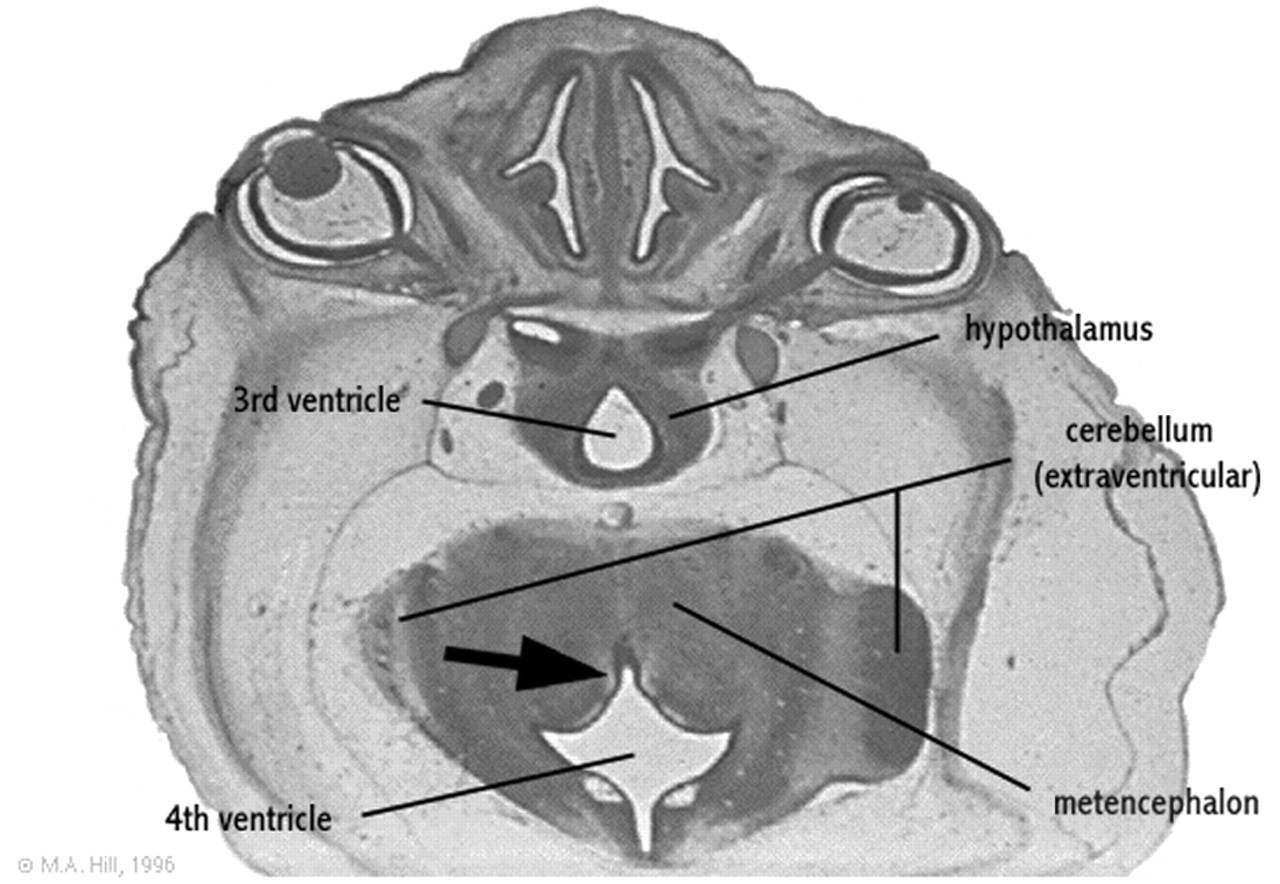
FIG 2. Rendering of the embryologic development of the fourth ventricle.

Axial section of a 27-mm human embryo (approximately day 56 and Carnegie stage 22) shows ventral fourth ventricular furrow (arrow) deeply indenting the posterior aspect of the developing metencephalon.

Modified from M. Hill, UNSW Embryology, version 3.0 (8), with permission.